
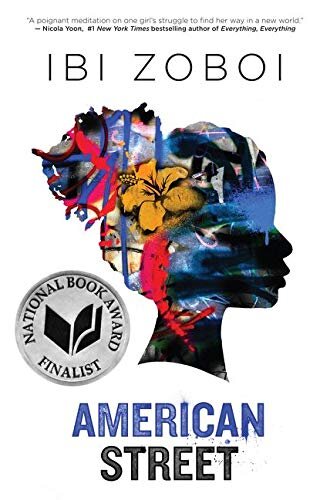
By Ibi Zoboi, HarperCollins, 2018
About the author: Ibi Zoboi was born in Haiti and immigrated to Brooklyn, New York with her mother when she was four years old. In an interview at the 2017 Miami Book Fair, she mentioned that there are some similarities between Fabiola, the main character, and herself. Both are from Port-au-Prince. Both immigrate to the United States. However, the similarities end there. Ibi immigrated when she was four years old; Fabiola is sixteen. Ibi and her mother moved to New York; Fabiola and her mother are immigrating to Detroit, but Fabiola’s mother is detained. When asked about the setting, Ibi chose Detroit because it resembled New York at that time: violence, drug addiction, poverty, unemployment and a large immigrant population. She used Google maps and discovered the intersection of American Street and Joy Road. She thought that was a perfect location for the story.
Brief synopsis: Fabiola Toussant and her mother are ready for the good life. They are leaving Port-au-Prince and immigrating to Detroit to live with her mom’s sister and her three daughters. However, Fabiola’s mom is detained and Fabiola is left alone to adjust to the “American way”, Detroit style. She sees that her aunt is sick and that her three cousins: Chantal, Donna, and Princess are loud, unique, and very “Americanized”, Detroit style. Fabiola struggles to balance her Haitian culture and beliefs with this American lifestyle, education system, and socialization. However, she learns to navigate as best as she can with her cousins’ and friends’ help and support. Add a love interest, and Fabiola is almost the “typical” teenager. As Fabiola continues to live with her family, she learns more about their lifestyles and that her aunt and cousins have some deeply guarded secrets. Fabiola has to make a decision. As she looks at the intersection of American Street and Joy Road, she says “My two paths meet at this corner, and it seems like I have to choose one. One street represents the future, the other leads to a different kind of life.” For Fabiola, her choice is difficult. When she decides, her choice not only affects her family and friends but also has serious consequences.
What works: Zoboi describes a rich Haitian culture in this story. Fabiola’s language, culture, and spiritual beliefs are authentic and defines her character. When Chantal, Donna, and Princess tell their own stories, the reader begins to understand their behaviors and personalities. Kasim, the cool guy, and Dray, the bad guy, add love and drama to the story. They, too, tell their story and their stories are revealing and very interesting.
What doesn’t work: Everything works for me.
Grab it: Almost every Detroit young adult should read this book and discover or rediscover American Street and Joy Road. Learning more about the Haitian culture is a plus and the relationship between Kasim and Fabiola is endearing. Definitely for high school students. After reading this story, some students may want to write their own story about their streets.
 Black Cotton Reviewers